


Hi Gang…
What a great story and fantastic fiber car of yesteryear – and it survives today as a beautifully restored sports car.
Gordon White wrote of this car in his 2001 book, Kurtis-Kraft: Masterworks of Speed and Style, and shared the following:
“One of the few 500Ms to compete in other than a stoplight drag was Bob Christie’s Nash-powered Kurtis. Christie, of Medford, Oregon, ran it in the 1954 Carrera Panamerica and was doing well until the supercharger overboosted the engine and melted several pistons.”
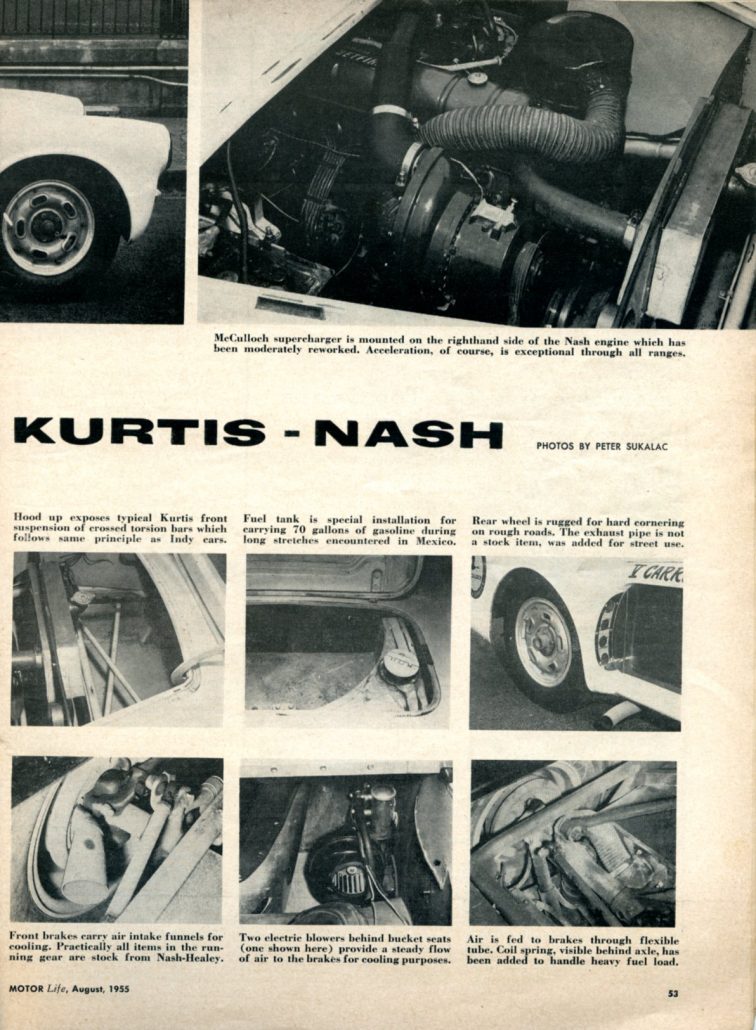
A Kurtis fiberglass sports car with racing history to boot? It can’t get better than this gang. Let’s take a look at what Motor Life had to say about this car back in ’55.
Supercharged Kurtis-Nash
Motor Life: August 1955
Photos And Story: Peter Sukalac
Sports car events in the Northwest are sure to have added interest during the 1955 season. Why? New cars and new drivers are making their debut. The unlimited class, especially, is being attacked by new specials, Mercs, Kurtis’s and Ferraris.
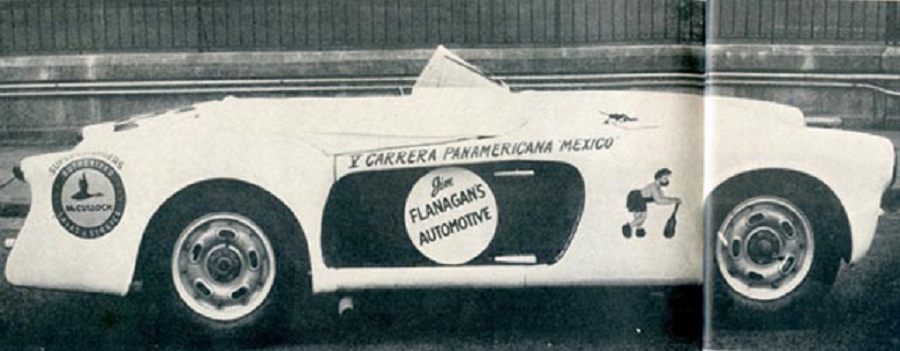
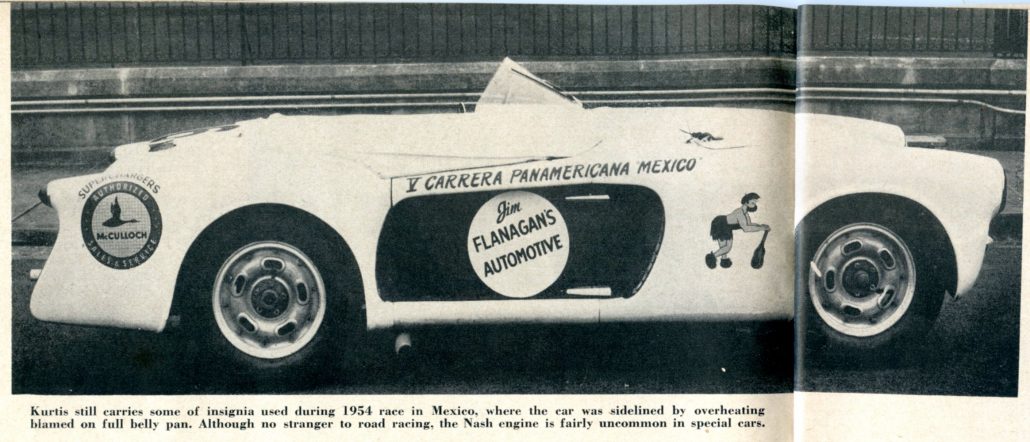
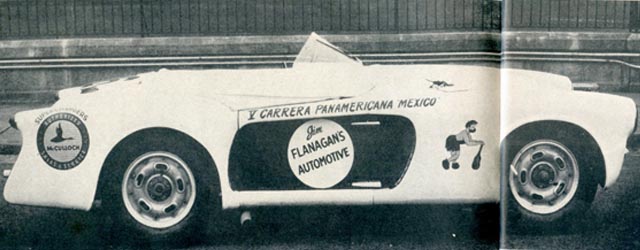
One of the most interesting of these newcomers is the Kurtis 500 belonging to Jim Flanagan’s Automotive, of Portland, Oregon. The car was originally assembled for Bob Christie of Medford, Oregon. Bob entered and raced the machine in the 1954 Mexican road race. He paced the leaders until overheating due to a full belly pan forced his retirement.
The open-bodied sports machine was returned to its home state and subsequently was purchased by Jim Flanagan. Jim plans to enter his new found sportster in every major sports car event open to the unlimited class.
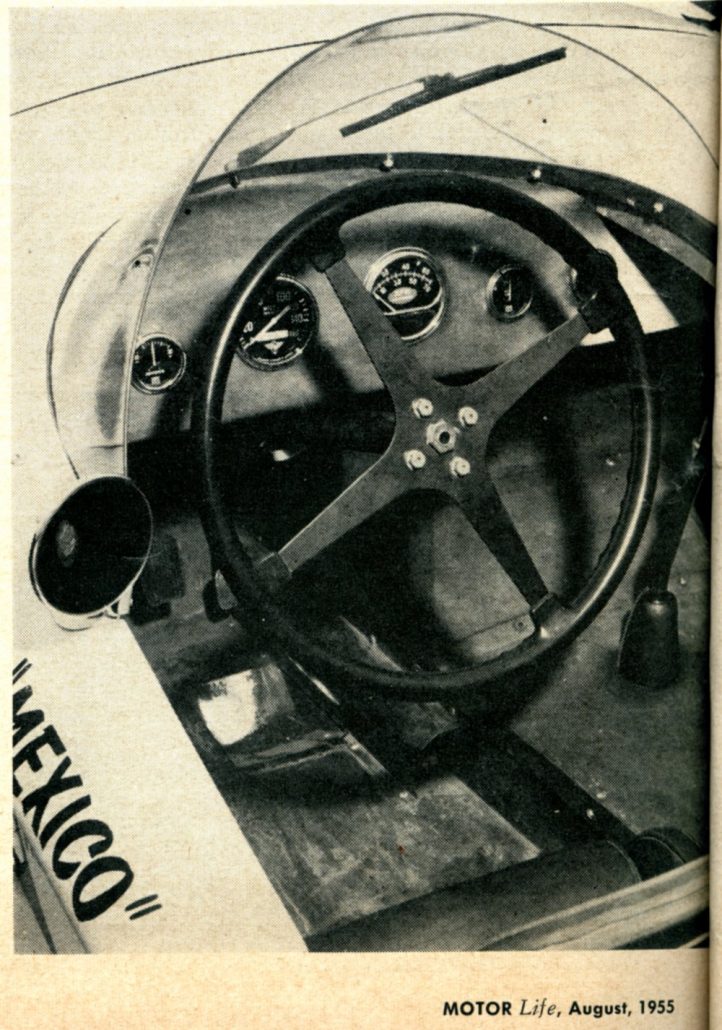
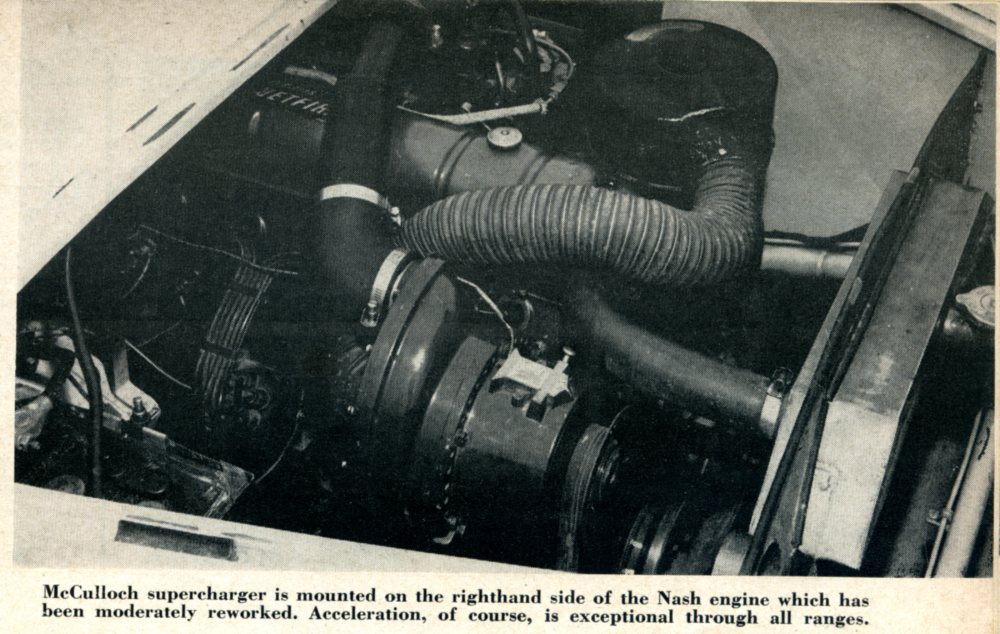
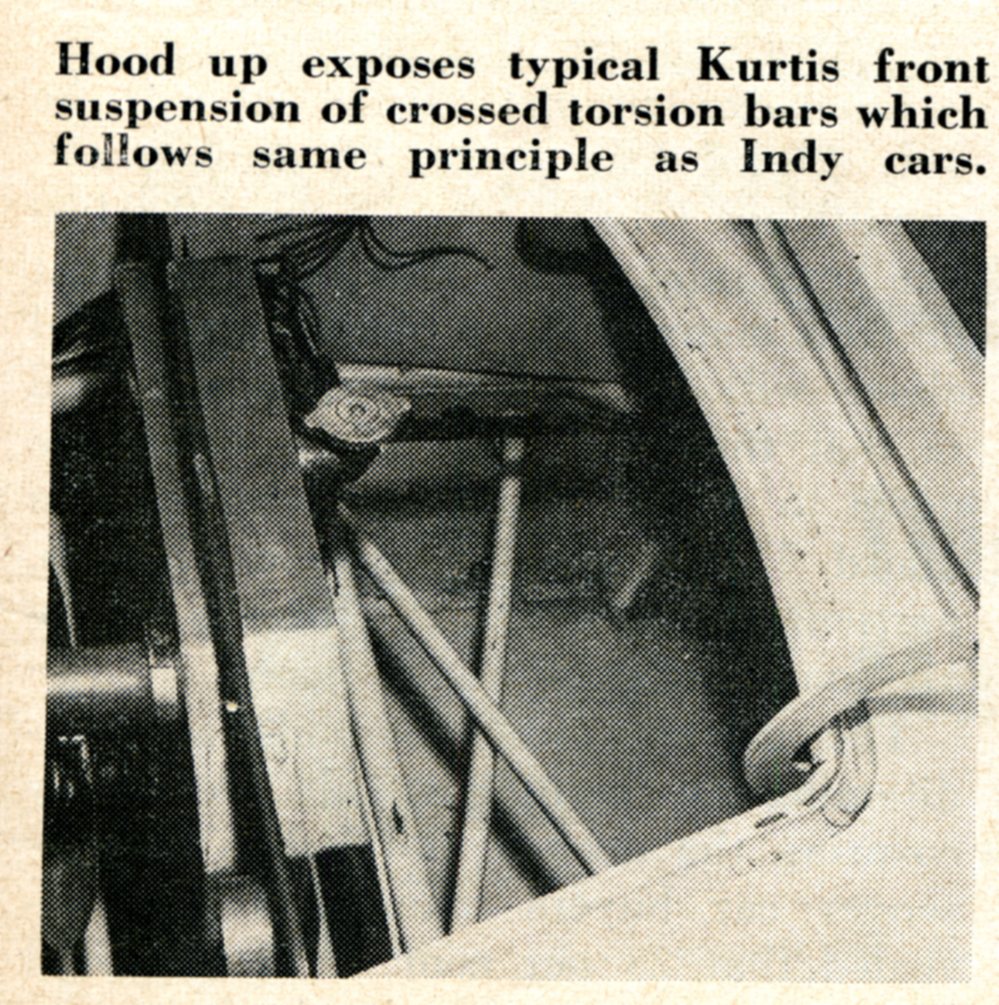
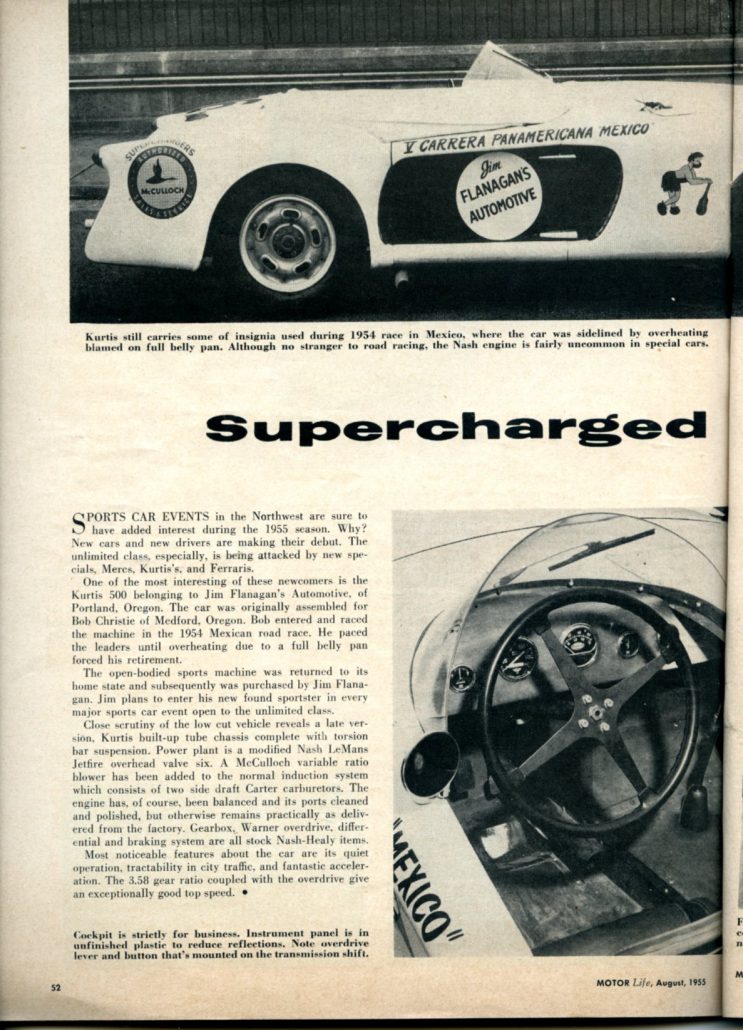
Close scrutiny of the low cut vehicle reveals a late version, Kurtis built-up tube chassis complete with torsion bar suspension. Power plant is a modified Nash LeMans Jetfire overhead valve six. A McCulloch variable ratio blower has been added to the normal induction system which consists of two side draft Carter carburetors. The engine has, of course, been balanced and its ports cleaned and polished, but otherwise remains practically as delivered from the factory. Gearbox, Warner overdrive, differential and braking system are all stock Nash-Healy items.
Most noticeable features about the car are its quiet operation, tractability in city traffic, and fantastic acceleration. The 3.58 gear ratio coupled with the overdrive give an exceptionally good top speed.
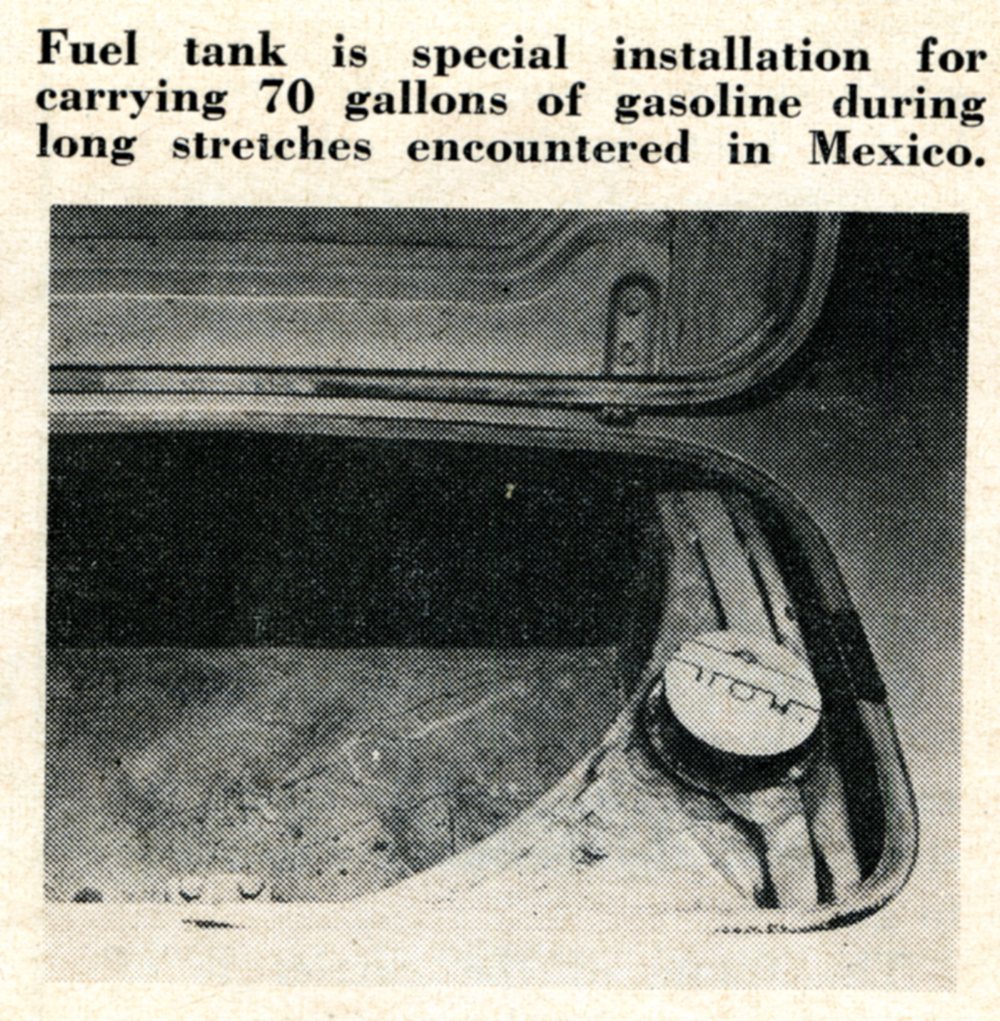
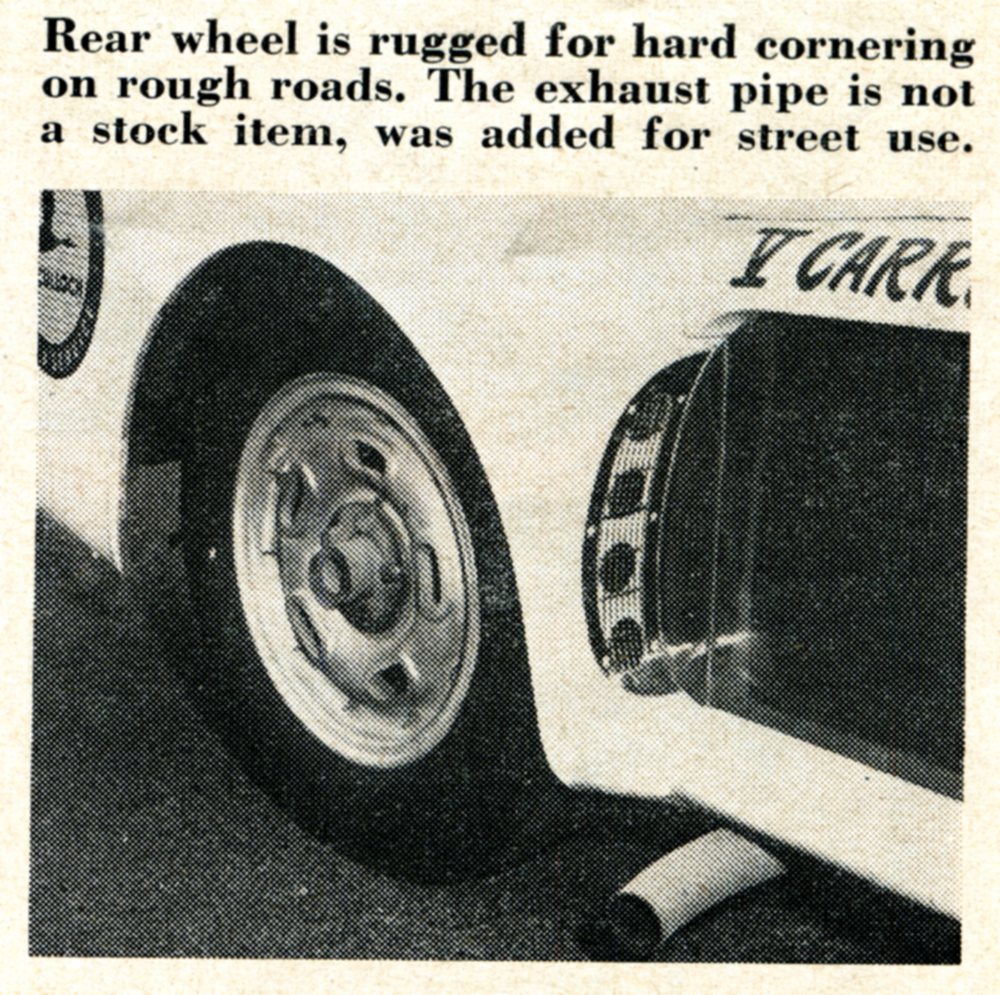
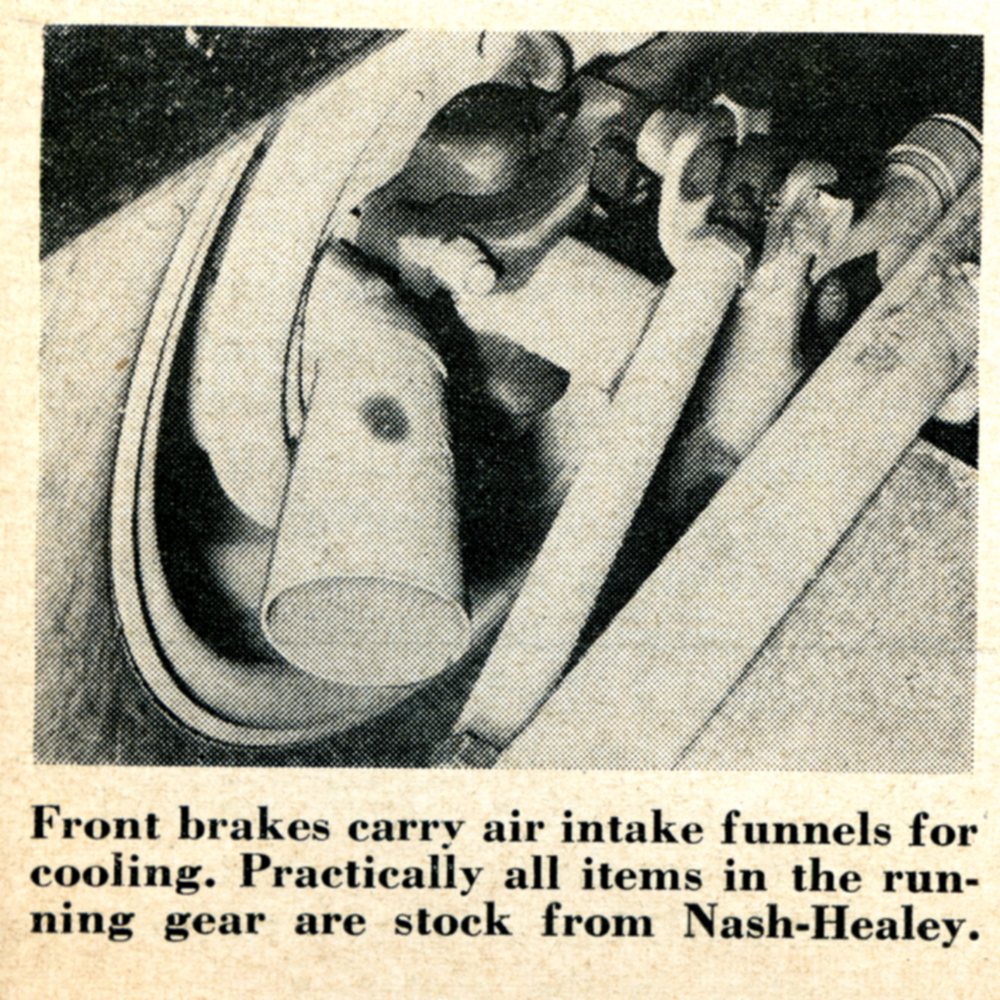
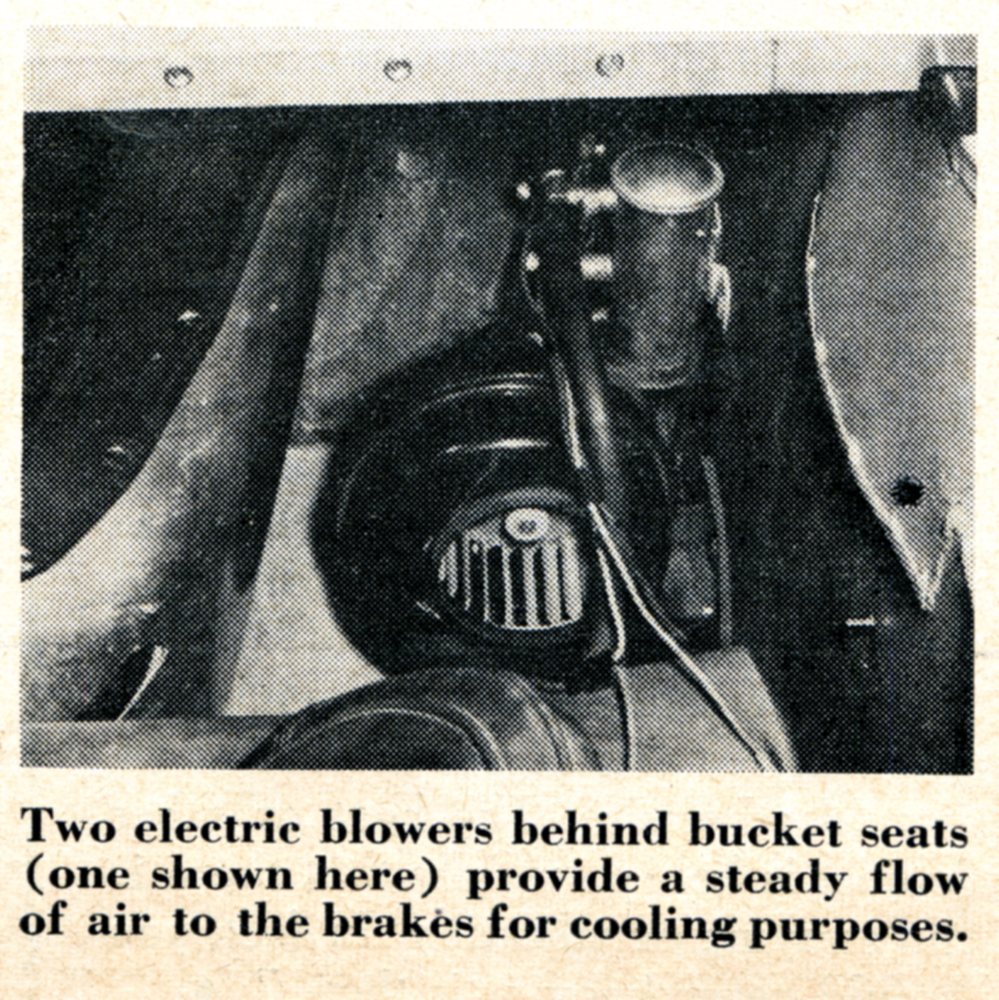
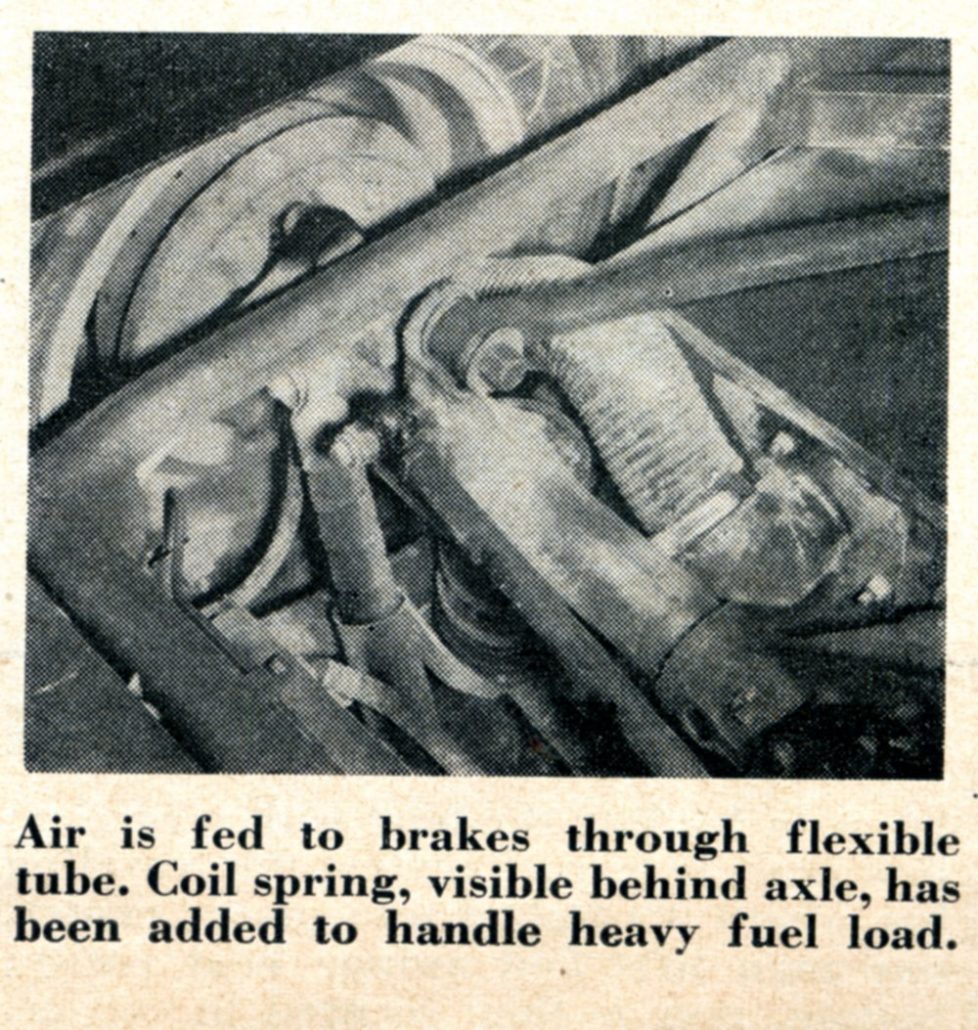
Summary:
Interestingly, in his book Gordon White expanded a bit on the number of Kurtis 500KK chassis built and the Kurtis 500M cars too, as follows:
“Kurtis said in 1966 that he made 60 500 kit chassis of which 18 were built as complete 500M chassis by the ill –fated Kurtis-McCullough Sports Car Company and were equipped with McCullough Motors Corporation fiberglass bodies. The rest (of the Kurtis 500KK chassis) had Glasspar, Victress, Allied, Woodill, Sorrell, Byers, Bangert, or other fiberglass shells on them. Kurtis estimated in 1982 (probably optimistically) that another 50 or so were sold as parts.”
We’ll have to check with Gordon but it sounds like the optimistic estimate by Frank Kurtis of “50” chassis being sold as parts were sold as complete chassis to individuals building their own cars. And as such, car guys back then would have built most of them with Glasspar, Victress, Allied, Woodill, Sorrell, Byers, Bangert, Meteor or custom fiberglass bodies. We’ve even found a few with beautiful aluminum one-off bodies.
So our best estimate at this point is that 18 Kurtis 500M cars were built and subtracting these from the “50” figure gives us about 32 Kurtis 500KK chassis out there that were bought by individuals to build their own cars. Sometimes these were finished (think of John Furlow’s Byers and Dudley Cunningham’s Meteor), and sometimes not.
As always, research continues and we’ll work on refining these figures with vetted information as we locate it.
Hope you enjoyed the story, and until next time…
Glass on gang…
Geoff
——————————————————————-
Click on the Images Below to View Larger Pictures
——————————————————————-
I know where this exact car is. My ex-wifes family are big car people (as am I). Her grandpa was a bit of a collector. Anyway, its sitting in a large shop full of other classic cars. Last I saw it, its in pretty rough shape but everything is there.
Thanks for the story on Bob Christie’s Kurtis Nash entry into the Carrerra Panamericana. Kay Woods, Bob’s chief mechanic, prepared this car out of his own garage on the North side of Grants Pass, Oregon. I was a fourteen-year old kid, living about a block from his house and was friends with Kim Woods, Kay’s son. I remember the excitement when the car arrived and the wonderful sound the supercharged Nash made while Kay was tuning it. It was so much more impressive that Christie’s Ford V-8 60 midget racer which dominated local races every week end. Just one note to add to your account. It says that the engine over-heated due to a full belly pan. I remember my dad (he, too, was a mechanic) and Kay talking about the race and the overheating. Kay said it was his fault. Bob Christie reported to him at one point during the race about the hood lifting open. The hood on the car was hinged at the front end, as one of your photos shows. And it was secured with leather straps and buckles. Christie was worried that it might pop up and blind him, so Kay decided to make a couple of steel straps and they bolted the hood shut. I didn’t ask why the g**-d***m thing was opening, I remember him saying, it was because the engine was over-heating! And that’s what took us out.
Hi Jim Watt,
I revisited this page while trying to find more info on the Christie car. Specifically a fellow in Spain is building replica 1/43 scale models of the 500M that Christie raced and enquired on the Autosport forums about the colors of the car. Obviously the car was white, but do you recall what color his recessed door areas were? All I’ve ever been able to find is black and white photos of the car, and it’s impossible to tell what the dark color was. Any help would be greatly appreciated.
Jay Rodgers
I wonder if the ’50 or so were sold as parts’ Kurtis referred to included selling torsion bars to purchasers of his plans. That seems like the only part of his frame that appears less than straight-forward to duplicate. The number does seem optimistic, but consistent with the numbers many kit/body makers of that era claimed.
My Kurtis 500M is chassis # MKK47, and I know another 500M has #48, and that’s the highest number I have seen. I have only been able to identify about 10 of these models on the Internet, and the lowest number I have seen is #28, which is now Arlen Kurtis’ black car, and the only one with roll up windows. But chassis number according to Arlen wasn’t reflective of when the car was built as they would just grab the closest frame available. I wonder if the the frames sold separately where marked MKK like mine, or just KK, as I’m thinking the M stood for McCulloch.
I know of only one Glasspar G2 that used a Kurtis frame, that car is unrestored, and has found it’s way across the pond, residing in England.
I believe the Carter side draft carbs were used on not only the turbocharged Corvairs but also on the 6 cylinder Corvettes of 1953 – 1955
That is correct. They were the YH model first on the 1952 Nash Healy and LeMans power pack engine in the Nash cars. They replaced the SU carbs on the 1951 NH.
It has been reported elsewhere that this car would go 170 mph. It would have given any of the Ferraris a run for the money. It blew-up about 1/2 way through the race. The rearend sounds like they used one from a Nash with an automatic trans. The Nash engine is 4.1L which was quite larger for 1954. The Carter carbs were later used on Corvairs and Y-block Ford marine engines.
A 3:50 rear-end ratio was fairly standard for cars with automatics in the 1950s. I have a 3:52 in my Glasspar and my Railton LST replica. It came from a 1952 Hudson / BW trans car.