


——————-
Note: This is the first part of a two part story concerning the history of Plasticar’s Marquis. Click here for the other part of this story
——————-
Editor’s Note: In honor of my recent trip – and new friends made in Pennsylvania….let’s discuss a fibercar from Pennsylvania today 🙂 The car featured here is the Marquis by Plasticar of Doylestown, Pennsylvania. Shown is the aluminum version, but plastic versions of the car were touted as “soon being on their way…” Introduced in late ’53, it would have been one of the earliest fiberglass sports car coupes ever built.
As you read today’s story and part 2 which I’ll publish soon, you’ll soon learn why the fiberglass version of this car has been lost to time – or perhaps not lost at all.
So many fiber-mysteries to solve…so little time…..
Off we go!
——————-
Hi Gang…
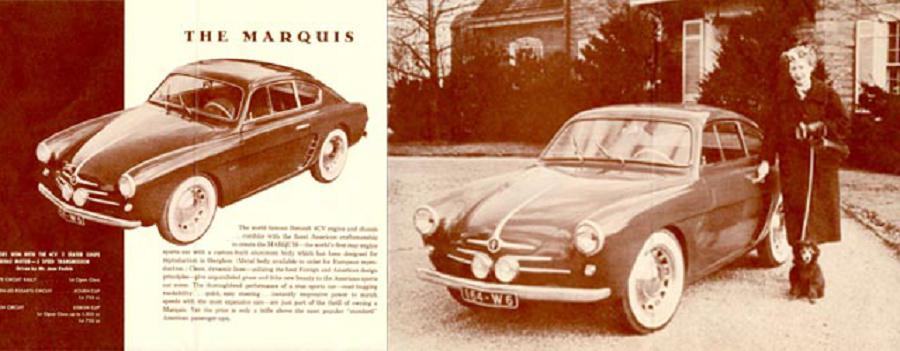
Plasticar Inc., of Doylestown, Pennsylvania burst forth on the fiberglass sports car scene in late ’53 with the following statement shown proudly on the front of their multi-page brochure:
“Presenting The World’s First Rear Engine Plastic Sports Car”
In this large-format 8 and 1/2 by 11 inch brochure, they introduced two cars that met this criteria: their sporty roadster called “The Rogue” and the stylish and elegant coupe called “The Marquis.” Click here to review an earlier story posted here on Forgotten Fiberglass concerning Plasticar’s Rogue.
They attribution above was right on for their Rogue, but not exactly accurate concerning the Marquis. Before digging into the history, let’s take a look at the relevant parts of their ’53 brochure having to do with the “Marquis.”
As with every story here at Forgotten Fiberglass, use your mouse to click on any picture below and it will become much larger on your screen.
Plasticar Brochure: Cover
Here the Marquis is shown handsomely on the first page of this large format 8 and ½ by 11 inch brochure. No doubt, this was going to be the model they would promote and sell. It was their “lead” car.
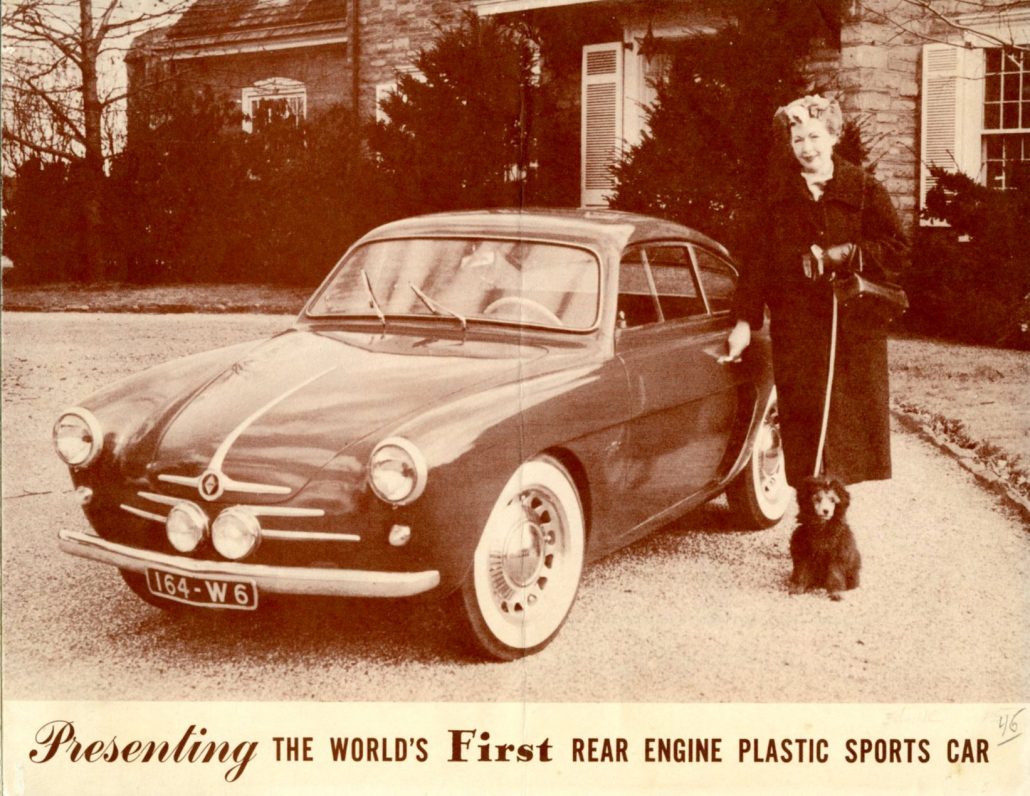
Page 1: The Marquis
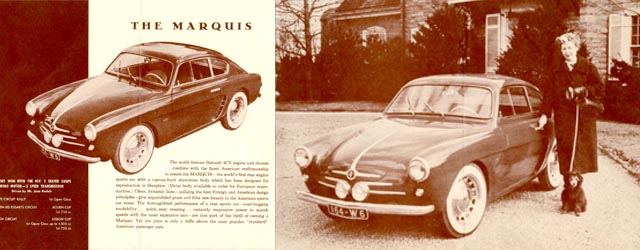
The world-famous Renault 4CV engine and chassis combine with the finest American craftsmanship to create the Marquis – the world’s first rear engine sports car with a custom-built aluminum body which has been designed for reproduction in fiberglass (metal body available to order for European reproduction.)
Clean, dynamic lines – utilizing the best Foreign and American design principles – give unparalleled grace and lithe new beauty to the American sports car scene. The thoroughbred performance of a true sports car – road-hugging roadability…quick, easy steering…instantly responsive power to match speeds with the most expensive cars – are just part of the thrill of owning a Marquis.
Yet the price is only a trifle above the most popular “standard” American passenger cars.
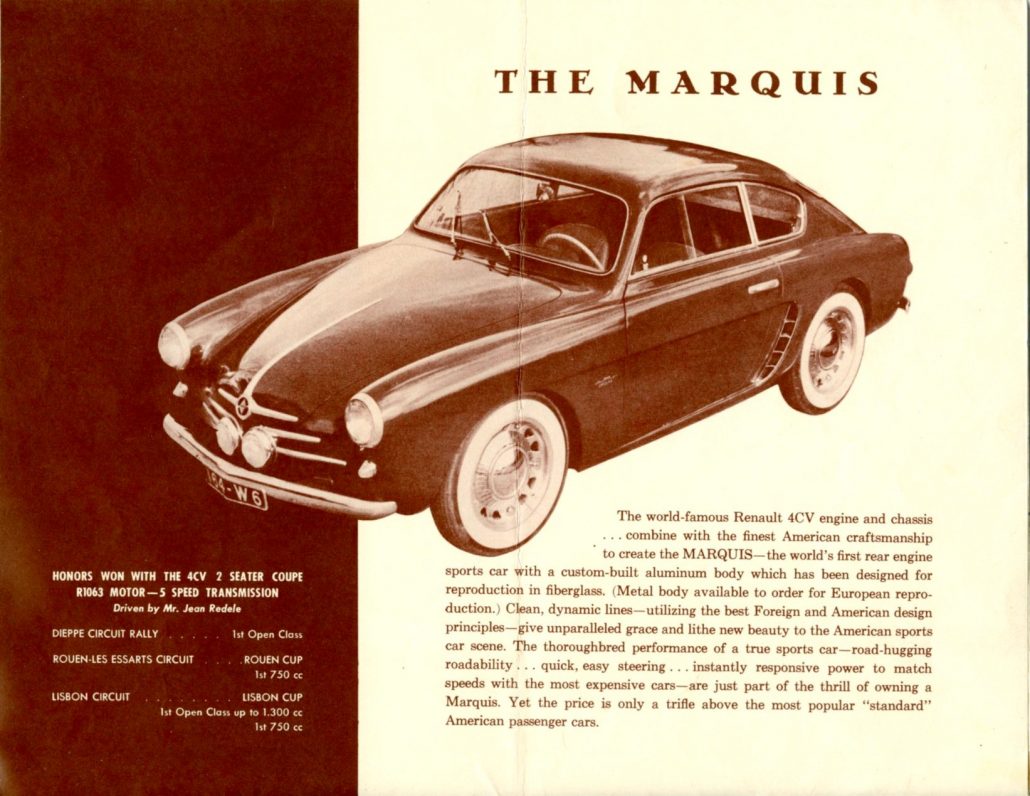
Page 2: The Marquis…Fashioned for Elegance, Economy, and Speed
For body styling that signifies the ultimate in international dignity, the Marquis offers that continental “look” with full sports car performance. All-weather comfort is provided by its hardtop body at present available on special order in aluminum and later reproduced in fiberglass reinforced plastic body.
The performance-proved Renault “750” engine mounted in the rear makes possible an extremely high degree of roadability without need for a space-consuming drive shaft tunnel running down the center.
Spare wheel and tire, as well as the battery, mounted under the hood leave ample room for luggage and tools. Equipped with two conventional racing type bucket seats, the Marquis further will accommodate jump seats or additional luggage in the rear.
Accessories include all those you would expect to find on a well-equipped modern sports car as exemplified by: an instrument panel that includes a speedometer, a tachometer, fuel, temperature, and oil gauges; sealed beam headlights with dimmer; and self-cancelling turn signals.
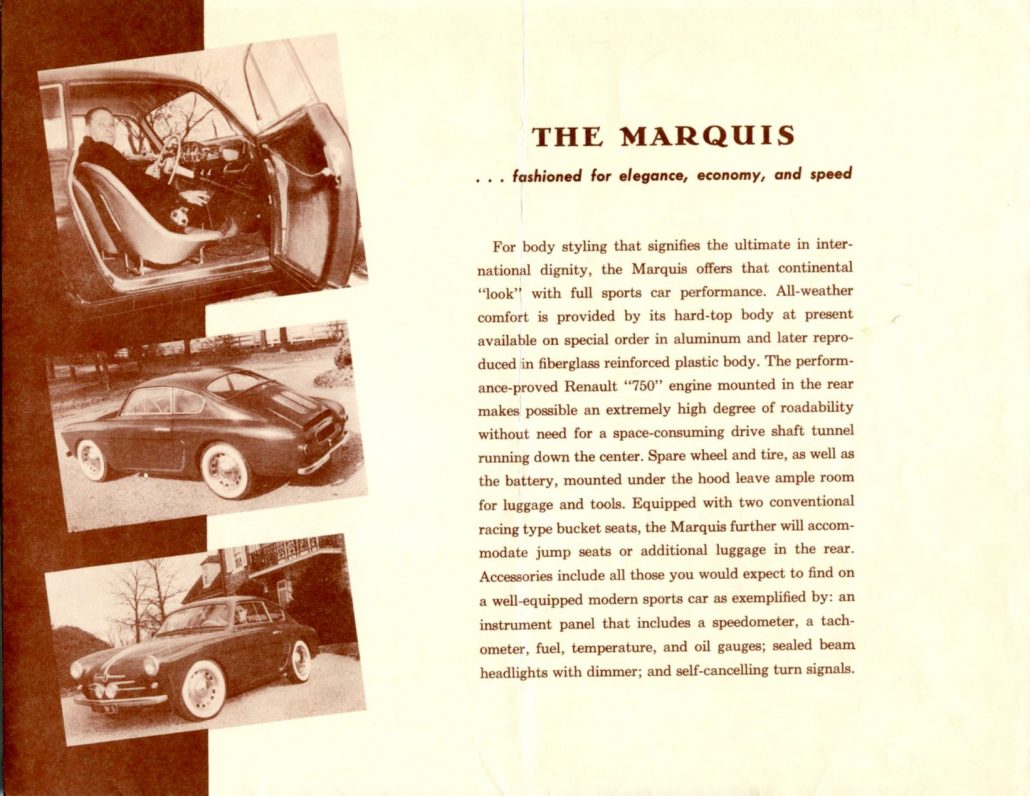
Page 3: The Renault 4CV Chassis…Trophy Winner ‘Round The World
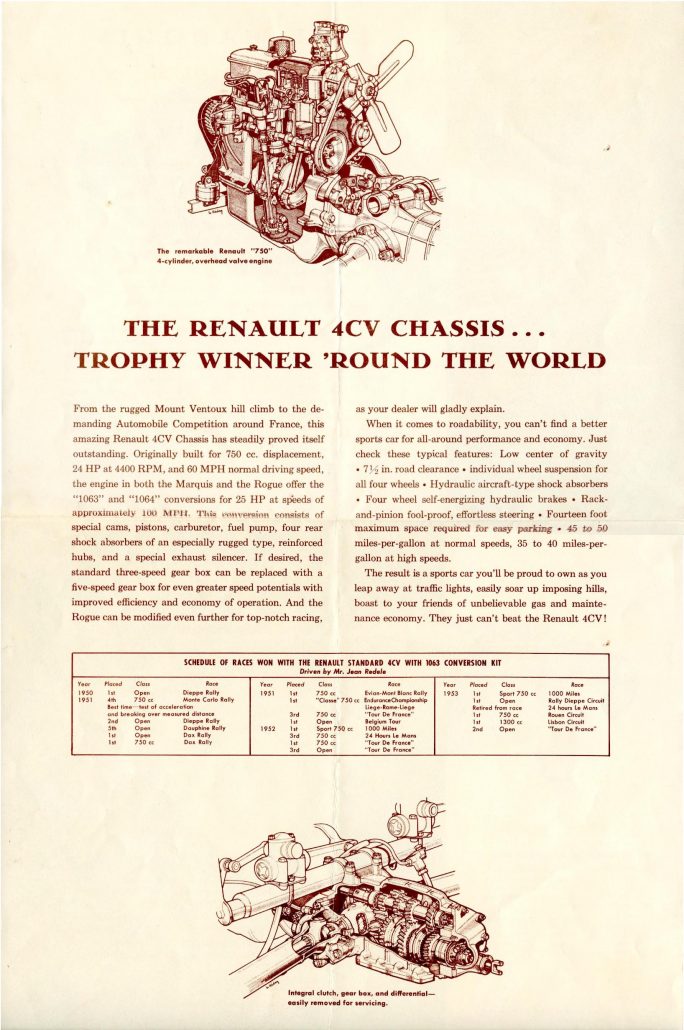
Page 4: Specifications For Engine, Chassis, and Optional Equipment
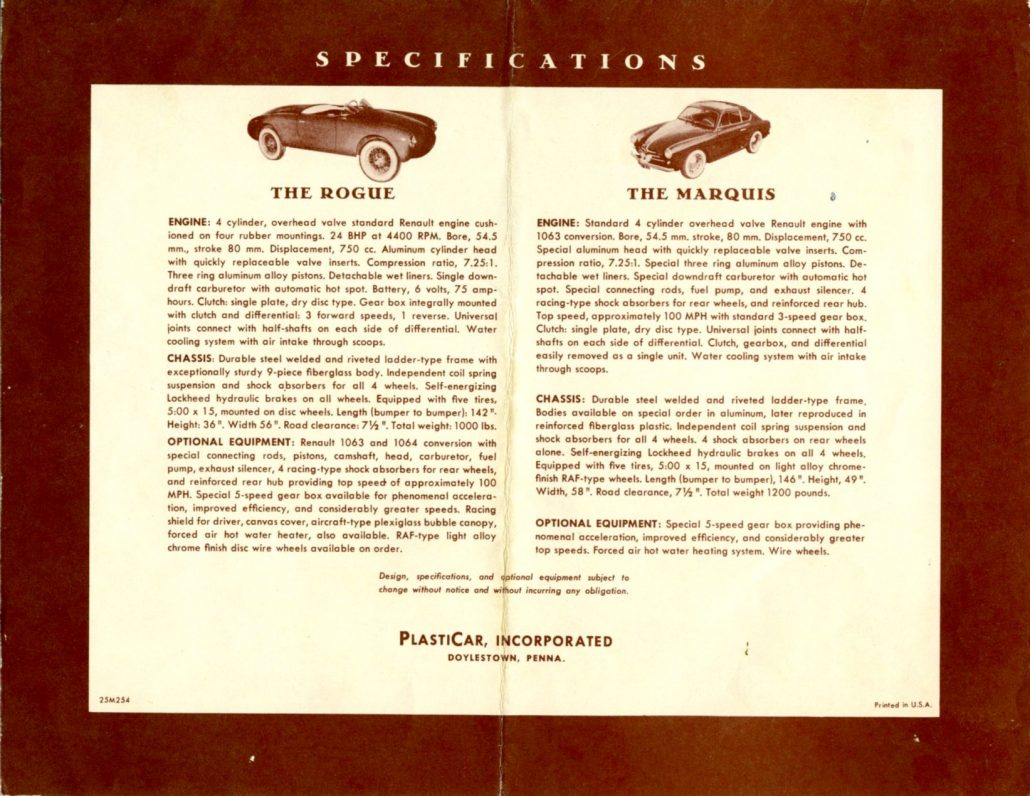
Summary:
So far we have found at least two Plasticar Rogue sports cars, but where are the Marquis sports cars? You ask very good questions gang 🙂 More on the history of the “Mystery Marquis” by Plasticar in a future story here at Forgotten Fiberglass.
Hope you enjoyed the story, and until next time…
Glass on gang…
Geoff
——————————————————————-
Click on the Images Below to View Larger Pictures
——————————————————————-
I agree with Jim,this design still looks good today.This has to be one of the best designs from that era,I have ever seen..
Mel
A coachbuilding company in Italy by the name of Motto used this same chassis/engine combo to build a very similar car called the GFH Sport – their bodies were metal, however, I wonder which car came first?
The Plasticar Company had a contract with Renault and did receive 75 chassis and driveslines out of a total that was to be 150. Roughly 23 sets still exist. Renault felt as many European car companies that America was the market for sports cars. The project definitely had great potential, with several great companies involved, unfortunely the primary person for Plasticar had better charisma than character.
Hi Todd,
Whatever became of the Plasticar works in PA?
What a wonderful little piece of styling, there is no reason why if one of these surfaced today that it would not be insanely collectible… The Renault drive train just adds to the exotic nature of the little car… This my friends would have been glass reinforced polyester at its finest… This completely rivals many of the finest sports cars of the day in styling.
While I may not personally be fussy about 4cv Renault’s, I would welcome one of these into my collection in a heartbeat. Bet the silly little rear engine small displacement car is actually fun to drive too… Just not terribly fast. What an absolute little jewel.
In my opinion, the Renault chassis and powertrain was the better way to go. Remember, at the time this car was conceived ~1953 or so, the splendid aftermarket bits for the VW that we all enjoy today were only beginning to sprout up here and there.
Renault, meanwhile, was enjoying racing success in Europe and America with their cars in the 750cc class of sports car racing. The French manufacturer even enlisted the aid of Gordini to become the tuner of their production racing and hopped up street models, therefore producing a thoroughly well engineered vehicle in terms of performance.
Had I been standing in the CEOs shoes at PlastiCar in early 1953, I would have went with Renault as well.
Neat looking little car! It’s unfortunate that they chose to use the Renault 4CV engine / chassis combination – had they used a VW combo who knows how far they might have gone!